














Watch one short ad and play ad-free for 30 minutes.
Chess
Skilli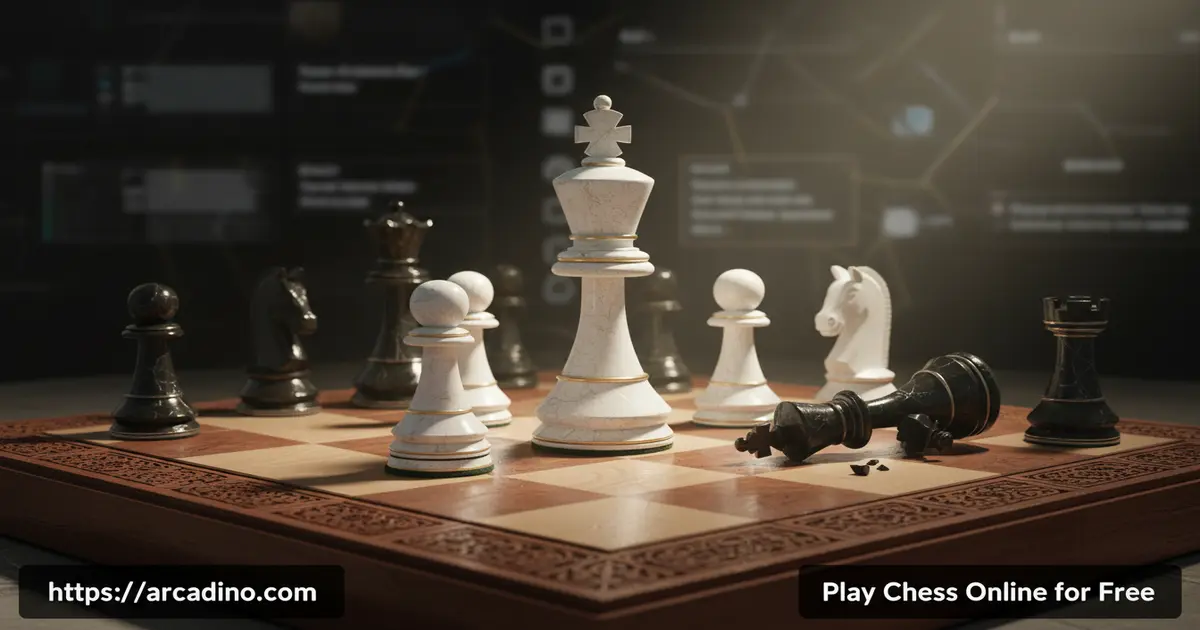
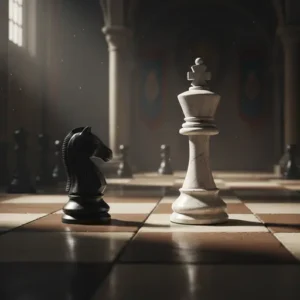
Chess is the oldest strategy battle on the planet, and now you can play it free online without installing anything. Two players, 32 pieces, and one goal — trap the enemy king before yours gets cornered. This browser version makes that classic fight instantly accessible, whether you’re a total beginner or already know your Sicilian Defense. The move-highlight system means you’ll never wonder what’s legal. 🎯
- Instant browser play — free, no download, no account needed
- Move highlighting — the game shows every legal move when you click a piece
- Two game modes — face the GarboChess AI or challenge a friend locally
- Real difficulty range — Easy through Hard, with Hard rated above ELO 2500
What Is Chess?
Chess is a two-player strategy board game played on an 8×8 grid of 64 alternating light and dark squares. Each player controls 16 pieces — pawns, rooks, knights, bishops, a queen, and a king — and the goal is to put the opponent’s king into checkmate. It’s one of the most studied games ever created, with professional tournaments running at the highest levels worldwide.
This browser version strips away any friction and puts the board right in front of you. The interface is clean and readable, and the move-highlight feature makes it noticeably friendlier for newer players than a physical board. From the first click, the game responds quickly and keeps the focus entirely on thinking rather than fumbling with rules lookups.
Chess Gameplay — The Core Loop
Each match starts with pieces in their standard positions: rooks in the corners, knights beside them, bishops beside the knights, the queen on her matching color, and the king filling the last square. Pawns line up across the entire second row for both sides. White always moves first, then players alternate one move at a time.
How Each Chess Piece Moves
- Rook: Slides any number of squares horizontally or vertically. It’s one of the most powerful pieces in open positions.
- Knight: Leaps in an L-shape — two squares in one direction, then one square sideways. Knights are the only pieces that can jump over other pieces. That makes them tricky and great for sneaky attacks.
- Bishop: Moves diagonally any number of squares. Each bishop stays on its starting color for the whole game.
- Queen: Combines the rook and bishop — she moves any number of squares in any direction. She’s the most powerful piece on the board.
- King: Moves exactly one square in any direction. Keep him safe — losing the king means losing the game.
- Pawn: Marches forward one square at a time (two squares on its very first move). Pawns capture diagonally, which surprises a lot of beginners. They can’t capture the piece directly in front of them — only the ones on the forward diagonals.
The game ends when a king is in check with no legal escape — that’s checkmate. But not every game ends with checkmate. A game can also end in a draw. The most common draw for beginners is stalemate — that’s when the player whose turn it is has no legal moves but their king isn’t in check. It counts as a draw, not a win, even if one side has way more pieces. Watch out for this if you’re winning — pushing your opponent into stalemate by accident is a frustrating way to miss a victory. Other draws include threefold repetition (the same position appearing three times in a row) and the 50-move rule (50 moves with no capture and no pawn move).
Special moves like castling add another layer of depth. To castle, move your king two squares toward a rook; the rook jumps to the other side. This is only legal if neither piece has moved yet, the path between them is clear, and no square the king crosses is under attack.
Two more special pawn moves are worth knowing. Pawn promotion happens when your pawn reaches the far end of the board — the opponent’s back row. The moment it gets there, you swap it for any piece you want (almost always a queen). This can completely flip the game. En passant is a rare but official pawn capture. If your opponent advances a pawn two squares from its starting spot and it lands right beside one of your pawns, you can capture it as if it had only moved one square — but only on your very next move. If you wait, the chance is gone. The browser version handles both of these rules automatically, so you’ll see them happen without needing to trigger them manually.
Game Modes and Challenges in Chess
You have two core choices when you start a match. Play against the computer for a solo session, or sit down against a friend for a local two-player game on the same device. Both options are ready from the main screen with no setup needed.
The computer opponent is powered by GarboChess, a serious chess engine. Easy mode is already challenging enough to test beginners — this isn’t a pushover AI. Hard mode climbs above ELO 2500, which puts it at grandmaster-level strength. Most adult club players would struggle badly at that setting, so younger players should absolutely start on Easy and work their way up.
What Is the GarboChess Engine?
GarboChess isn’t just a generic computer opponent — it’s a real, named chess engine written by developer Gary Linscott. What makes it special is that it’s built entirely in JavaScript, which means it runs directly inside your browser without contacting any server. Most strong chess engines need a server to think on your behalf, which adds delay and requires an internet connection at every move. GarboChess does all of that thinking locally on your device, so moves happen fast with no lag, no server fees, and no privacy concerns. Once the game page has loaded, the engine keeps working even if your connection drops. That’s a big deal for a browser game — it means you’re getting the power of a grandmaster-level AI without any of the infrastructure that usually comes with it. No other free browser chess game in the top results explains this, but it’s one of the real reasons this version feels so snappy and responsive compared to alternatives.
Levels and Progression in Chess
Chess doesn’t have levels in the traditional sense — every game is a fresh battle of wits. But your skill absolutely progresses the more you play. You’ll start seeing patterns like forks, pins, and discovered attacks as you gain experience against the AI.
The biggest progression milestone in Chess is moving from reactive play to planning ahead. Beginners react to threats; stronger players create them. Each match against a tougher difficulty setting is its own kind of level-up challenge, pushing you to think two or three moves further into the future than you did before.
How to Play Chess
Set up your board so the bottom-right corner square is light-colored — remember the phrase “light on right” to get this correct every time. Place rooks in the corners, knights next to them, then bishops. Your queen goes on her matching color, and the king takes the last square. Fill your second row completely with pawns.
Click any of your pieces to see its legal moves highlighted on the board. Pick a highlighted square to complete your move. Then your opponent — human or AI — takes their turn. Keep developing your pieces toward the center and watch the opponent’s threats with every move they make.
Chess Controls
Controls in this browser version are entirely mouse-driven. Click a piece to select it and see all legal moves highlighted. Click a highlighted destination square to move the piece there. On mobile or tablet, tap to select and tap again to move — the touch controls feel just as snappy as the desktop version.
Using Move Highlights as a Learning Tool
Most players use the move-highlight feature just to confirm a legal move before clicking — but you can get a lot more out of it than that. Try clicking every single piece before you decide your move, not just the one you plan to use. Each time you click, you see exactly which squares that piece controls right now. Doing this for your whole army gives you a real-time map of what you’re threatening and where your pieces are weak or underused. It also works on the opponent’s side in your head — once you know where your pieces reach, you can start spotting which of their pieces have no defenders. This technique turns the highlight system from a convenience into a genuine training drill. It’s one of the fastest ways to build board awareness without a coach, and it only takes a few extra seconds per turn.
Tips and Tricks for Chess
- Control the center early: Squares like e4, d4, e5, and d5 give your pieces maximum range. Pieces in the center control more of the board than pieces stuck on the edges.
- Don’t charge with your queen immediately: Rushing the queen out early is a beginner trap. Develop your knights and bishops first so your queen has backup when she enters the fight.
- Castle before move 10 if possible: Castling tucks your king behind a wall of pawns and connects your rooks. An uncastled king in the center is a constant target.
- Use the move highlights wisely: When you click a piece, study every highlighted square before choosing. Sometimes a move you didn’t notice at first is far stronger than your first instinct.
- Trade pieces when you’re ahead: If you’ve captured more material than your opponent, swap off pieces to simplify. Fewer pieces on the board means your advantage becomes easier to convert into checkmate.
Key Features of Chess
- Legal move highlighting: Click any piece and every valid destination lights up instantly — great for players still learning how pieces move.
- GarboChess AI opponent: The built-in computer engine reaches ELO 2500+ on hard difficulty, giving serious players a genuine challenge.
- Local two-player mode: Pass the device to a friend and play a proper 1v1 Chess match without needing any accounts or extra setup.
- Full castling rules implemented: The game enforces all legal castling conditions automatically — no need to remember the fine print yourself.
- Free and instant browser access: The full game loads in your browser at arcadino.com with zero barriers between you and a match.
Where to Play Chess
The fastest way to play is right in your browser at arcadino.com. The game loads without any sign-up or download, so you’re at the board in seconds. It runs on desktop and laptop browsers smoothly, and there are no access restrictions — you can reach it at school, at home, or anywhere else with an internet connection.
On a phone or tablet, just open your mobile browser and head to arcadino.com — the game works directly in the browser without needing a separate app download. The touch controls are responsive and the board scales well to smaller screens, so you get the full experience whether you’re on a phone, tablet, or desktop.
Playing Chess at School or in the Library
This browser version of Chess is a great fit for school computers and library devices. Because it runs entirely in the browser, there’s nothing to install and no admin permissions are needed — if the site loads, the game works. No account is created and no personal data is collected, so there are no sign-up forms for students to fill out and no information for schools to worry about. The game has no chat feature, which means it won’t trigger content filters the way multiplayer platforms sometimes do. The cognitive benefits — planning ahead, pattern recognition, and focused thinking — line up directly with skills schools care about. It’s a smart pick for free periods, chess club sessions, or enrichment time, and it works on any shared device without leaving any trace behind when the browser tab is closed.
For Parents
Chess is one of the safest and most educational games a child can play. There’s no violence, no mature themes, and no in-game chat in this browser version — just pure strategic thinking. Research consistently links regular chess play to improved problem-solving, concentration, and mathematical reasoning in kids aged 8 and up.
This particular browser version has no in-app purchases and requires no account creation, making it completely safe for unsupervised play. Even 20–30 minutes of Chess a day can build real cognitive habits. The AI difficulty settings make it easy to find a challenge level that keeps your child engaged without being discouraging.
Similar Games to Chess
If you love the deep strategy of Chess, these classic brain games all reward careful thinking and smart planning.
- Checkers — The other classic board game of pure strategy, where diagonal jumps and king promotions create surprisingly deep tactical battles.
- Sudoku — A number-placement logic puzzle that exercises the same pattern recognition and forward-thinking skills that make chess players strong.
- Solitaire — The iconic solo card game where sequencing, planning moves ahead, and managing limited options mirror the patience chess demands.
- Tic-Tac-Toe — The simplest strategy game there is, but a great starting point for younger players learning to think ahead before making a move.
- Wordle — A word-guessing puzzle where each guess narrows the possibilities, rewarding the same logical elimination process chess players use.
- Tetris — A falling-block puzzle that trains spatial awareness and quick decision-making under pressure, skills every chess player relies on in timed matches.
Explore more games like this in the Brain category.
FAQs About Chess
Is Chess free to play online?
Yes, Chess is completely free to play in your browser. No download, payment, or account is required. Just visit arcadino.com and the game is ready to go instantly.
How do I win a game of Chess?
You win by putting your opponent’s king in checkmate. That means the king is under attack and has no legal move to escape. Every piece you move should work toward creating that situation while keeping your own king safe.
How does castling work in Chess?
Move your king two squares toward a rook to castle. The rook then jumps to the square on the other side of the king. You can only castle if neither the king nor that rook has moved yet, the path between them is empty, and no square the king crosses is under attack.
What difficulty levels does the Chess AI have?
The AI offers two difficulty settings: Easy and Hard. Easy mode gives beginners a real workout without being overwhelming — it’s a genuine opponent, not a pushover. Hard mode runs the GarboChess engine at above ELO 2500, which is grandmaster-level strength and will challenge even experienced adult players. There are no intermediate settings, so jumping from Easy to Hard is a big step — take your time on Easy until you’re winning consistently before making the switch.
Can I play Chess against a friend on the same device?
Yes, Chess includes a local two-player mode. Both players take turns on the same screen, making it great for playing against a sibling or classmate without needing two devices.
What does the move highlight feature do?
It shows every legal move for whichever piece you click. All valid destination squares light up on the board. This makes it much easier to learn how each piece moves without memorizing the rules first.
Is Chess good for kids to play?
Yes, Chess is an excellent game for kids. It builds critical thinking, concentration, and planning skills. This browser version has no chat, no purchases, and no inappropriate content, making it suitable for ages 8 and up.
Conclusion
Chess delivers the full depth of one of history’s greatest strategy games right in your browser, completely free. The move-highlight system removes the biggest barrier for beginners, while the GarboChess engine at ELO 2500+ gives experienced players a wall to climb against. Local two-player mode means you can use it as a proper board game replacement with a friend right beside you.
Every match of Chess is a new puzzle — a contest of patience, creativity, and tactical vision that no other game quite replicates. Head to arcadino.com, pick your difficulty, and find out how deep your strategy actually goes.
Gameplay Video