







Arcadino’s educational games for kids are chosen with one question in mind: does this game actually make children think? Every title in this category asks players to read, calculate, deduce, or experiment. Parents looking for screen time that builds vocabulary, logic, or problem-solving skills will find browser-ready picks here. There are no downloads and no accounts required. Kids click and play, while the gameplay quietly reinforces patterns, language, and reasoning that line up with classroom learning goals.
Why Educational Games for Kids Belong in a Balanced Routine
Learning games work best when the challenge feels like a puzzle, not a worksheet. Titles like 4 Pics 1 Word strengthen vocabulary and visual reasoning by asking players to spot the link between four images. Little Alchemy and Infinite Craft introduce element-combination logic, which mirrors early scientific thinking. Brain Test: Tricky Puzzles rewards lateral thinking and reading comprehension. These free educational games give kids small, repeatable wins that build confidence without the pressure of grades or timers.
How These Games Map to Real Learning Skills
Each genre on this page targets a specific cognitive skill that parents and teachers already value. Word games sharpen spelling, vocabulary, and visual-verbal matching. Combination games like Doodle God teach hypothesis testing through trial and error. Logic puzzles train working memory and sequential reasoning. Number games strengthen arithmetic fluency and forward planning. The shared thread is active problem-solving, not passive consumption. Children learn to pause, predict an outcome, then adjust their next move based on feedback.
What to Expect From This Category
- Word and vocabulary challenges that reward careful reading and spelling.
- Logic puzzles that ask players to test ideas, not memorize answers.
- Combination and discovery games that reward curiosity and experimentation.
- Number-based games like 2048 that practice mental math and planning.
- Short play sessions that fit comfortably inside a healthy screen-time limit.
- Browser-only access, so nothing installs on your child’s device.
Top Picks in Educational Browser Games
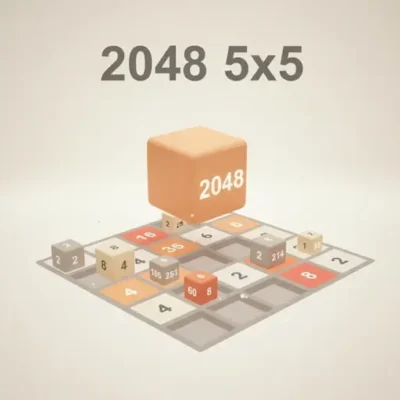
For language practice, 4 Pics 1 Word is one of the most accessible kids learning games on the site. It pairs visual clues with letter banks, making it useful for younger readers and ESL learners alike. Infinite Craft and Doodle God lean into open-ended discovery, where children combine basic elements to create hundreds of new ones. For pure logic, 2048 5×5 offers a larger grid that adds strategic depth to a familiar number puzzle. Each one rewards patience and pattern recognition.
Choosing the Right Game by Age and Skill
Younger children around ages 8 to 9 often do best with image-led titles like 4 Pics 1 Word. The picture cues lower the reading barrier while still building spelling skills. Ages 10 to 11 tend to enjoy Little Alchemy and Doodle God because the combination logic feels like real discovery. Older children in the 12 to 13 range usually appreciate the deeper strategy of 2048 5×5 and Brain Test. If your child finishes a game quickly, try one a tier harder rather than longer sessions.
Tips for Playing Together
Sitting next to your child for the first round changes the experience. Ask them to explain their guess before clicking. In Little Alchemy, suggest two elements and predict the result together. With Brain Test, read the puzzle aloud and discuss what the words might really mean. Short co-play sessions help children verbalize their reasoning, which strengthens learning more than solo play. They also give parents a quick read on which skills feel solid and which need practice.
Frequently Asked Questions
Are these educational games really free?
Yes. Every game in this category runs in your browser at no cost. There are no trials, sign-ups, or paywalls blocking the core gameplay.
What ages are these school games best suited for?
Most titles fit children roughly 8 to 13, though younger readers can enjoy word and matching games with light parental support. Difficulty varies by title, so previewing a game first is always sensible.
Do educational browser games count as healthy screen time?
Interactive, problem-solving play is generally considered more constructive than passive viewing. Pediatric guidance still recommends overall daily limits. Our screen time guide covers practical balance tips for families.
Are these games safe for kids to play unsupervised?
The titles listed here are selected for kid-appropriate content. For broader guidance, see our article on whether browser games are safe for kids, which covers ads, privacy, and what to watch for.
Can teachers use these games in the classroom?
Yes, browser-based titles work well on school devices because nothing installs. Word and logic games suit warm-up activities or early-finisher stations. Pick one game and set a clear three to five minute goal to keep the lesson focused.
How long should a single play session last?
Short, focused sessions of 15 to 20 minutes tend to work best for learning. Children stay engaged, finish on a high note, and avoid fatigue. Stopping mid-puzzle is fine and often makes the next session more rewarding.
Start Exploring
Browse the games below to find a title that matches your child’s age and current interests. For more thinking-focused play, try our puzzle games category, or read our roundup of free educational games for kids for handpicked recommendations.