














Looking for screen time that actually flexes a young mind? Arcadino’s brain games turn memory, logic, and pattern recognition into challenges kids genuinely want to replay. Every title here was picked because it rewards thinking over reflexes, making this category a favorite with parents who want games that earn their place on the tablet. Kids get the buzz of solving something tricky. Parents get peace of mind. Best of all, every game runs in the browser, so there’s nothing to install before the first puzzle clicks into place.
Why Brain Games Belong in Your Child’s Routine
Unlike action titles, brain games ask players to slow down, plan, and notice details. A round of Sudoku sharpens number logic. 2048 teaches kids to think two or three moves ahead. Word-based picks like 4 Pics 1 Word stretch vocabulary, while tile-matching classics like Mahjong build visual scanning skills. Even cheerful match-three games like Garden Tales and Cookie Crush 3 quietly train pattern recognition. The variety means kids rarely get bored, and they keep coming back for more.
Fun That Feels Nothing Like School
For kids aged 8 to 13, the word ‘educational’ can be a turn-off. That’s exactly why this collection works. There are no worksheets, no grades, and no teacher waiting for an answer. Instead, kids see colourful tiles, satisfying sound effects, and the small thrill of beating their last score. The thinking happens in the background. Parents who’ve struggled with homework battles often find that Sudoku reinforces the same number sense that maths class is trying to build, and 4 Pics 1 Word sneaks in spelling practice between rounds. It’s transfer without the resistance.
Real-World Skills Hidden in the Gameplay
Many of these games map directly onto school-day skills. Sudoku and 2048 support mental arithmetic. The Idiot Test rewards careful reading of instructions, a skill teachers wish more kids practised. Unblock Me and Woodoku build the spatial reasoning behind geometry. Even Liquid Sort and Bird Sort teach kids to test a hypothesis, backtrack, and try again. Those habits stick long after the browser tab closes.
What to Expect Inside This Category
Number Puzzles
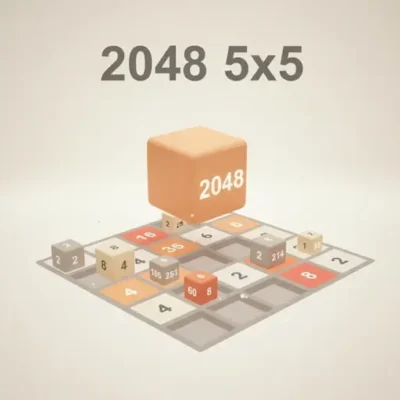
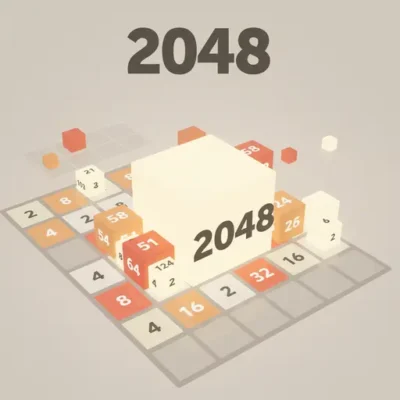
Math-flavoured picks that build fluency without flashcards. Try 2048, 2048 5×5, Threes, and Sudoku for steady number sense and planning practice.
Card Challenges
Solitaire variants reward patience and forward thinking. Kids can choose Solitaire, Klondike Solitaire, FreeCell, Pyramid Solitaire, TriPeaks Solitaire, Spider Solitaire, Golf Solitaire, Yukon Solitaire, or Triple Solitaire.
Block & Sorting Games
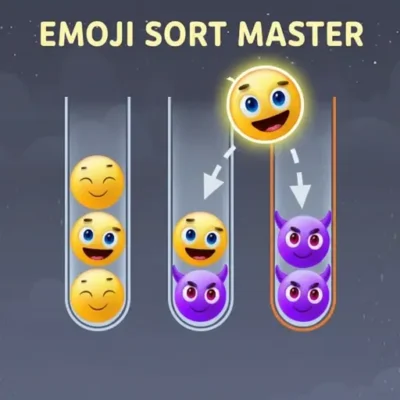
Spatial thinkers will love Woodoku, Wood Block Puzzle, 1010! Block Puzzle Game, 1010! Deluxe, Liquid Sort, Bird Sort, Sort Master, and Emoji Sort Master.
Word & Trivia
Vocabulary and lateral thinking come together in 4 Pics 1 Word, The Idiot Test, Brain Teaser, and Brain Test: Tricky Puzzles.
Strategy Classics
Timeless picks like Checkers, Reversi, Connect 4, Backgammon, Mancala, Chinese Checkers, and Tic Tac Toe teach kids to think several moves ahead. Many of these also appear in our Board collection.
Physics & Creative Logic
For kids who like cause-and-effect thinking, try Cut the Rope, Cut the Rope 2, Happy Glass, Happy Glass 2, and Love Balls. Creative combiners like Little Alchemy, Doodle God, and Infinite Craft reward curiosity and experimentation.
Top Picks to Try First
If your child is new to the genre, start with Woodoku, a calm block puzzle that mixes Sudoku logic with Tetris-style placement. From there, Brain Test: Tricky Puzzles adds twisty, out-of-the-box riddles that reward creative thinking. Older kids often love Unblock Me for its escalating spatial challenge, while families enjoy two-player rounds of Connect 4 or Backgammon. For longer sessions, Klondike Solitaire and Mahjong remain timeless. Every pick on this list is free and plays straight in the browser.
A Difficulty Ladder for New Brain Gamers
Not sure where to begin? Use this gentle progression. Start with Woodoku to learn the joy of clean placements. Move to Sudoku once your child enjoys spotting patterns. Add Unblock Me for spatial planning, then graduate to Brain Test: Tricky Puzzles for lateral leaps. Strategy-minded kids can finish the ladder with Checkers or Reversi. Each step adds one new kind of thinking without overwhelming the last.
Family & Two-Player Favourites
Brain games don’t have to be solo. Set up a tablet between two kids — or one kid and a parent — and the screen becomes a tiny board game cafe. Connect 4 is perfect for quick warm-ups. Checkers, Reversi, and Chinese Checkers stretch into longer matches. Backgammon and Mancala teach probability and patience in equal measure. Even simple Tic Tac Toe sparks great talks about strategy with younger players. Co-play turns screen time into shared time.
Classroom, Homeschool & Rainy-Day Use
Teachers and homeschool parents have quietly adopted this category as a transition tool. A five-minute round of Sudoku resets focus before a maths lesson. 4 Pics 1 Word warms up spelling brains. After-school clubs use Connect 4 and Checkers as low-prep activities. On wet weekends, a difficulty ladder of puzzles keeps boredom away without anyone reaching for a download. Because there are no accounts to set up, a classroom can be playing within thirty seconds of opening a browser tab.
A Calmer Alternative to Action Games
If your child finishes a noisy shooter feeling wired, a brain game can be the off-ramp. The pace is slower, the music gentler, and the goals achievable in short bursts. Mahjong, Pyramid Solitaire, and Woodoku are especially good for cooling down before homework or bedtime. Many parents use a single quiet round as a transition cue between high-energy play and the next part of the day. It’s screen time that lowers the temperature instead of raising it.
Safe & Parent-Friendly by Default
Every game in this category loads in your browser with no sign-up, no email, and no installs. There are no mid-puzzle ads interrupting a tricky move, and no in-game purchases pestering kids to spend. That matters when a nine-year-old is mid-Sudoku and you’re across the room. You can hand over the tablet without bracing for a pop-up.
Frequently Asked Questions
What’s the best brain game for kids to start with?
For most kids aged 8 and up, Woodoku is the easiest gateway. It looks calm, plays intuitively, and teaches the planning habits that Sudoku will later reward.
Are free brain exercises online actually worth the time?
Yes, when they’re chosen well. Short daily rounds of logic, memory, and pattern games build focus the same way regular reading builds vocabulary. The trick is variety, not volume.
Are these brain games for kids really educational?
They’re designed for fun first, but the gameplay naturally exercises memory, logic, and focus. Think of them as practice, not lessons.
What age group are these games best for?
Most titles work well for ages 8 to 13. Younger children may need help reading instructions on word-based picks like 4 Pics 1 Word.
Do I need to install anything?
No. Every game runs straight in your browser on a laptop, Chromebook, or tablet. There are no accounts or downloads required.
How long should a brain training session last?
Short, regular sessions tend to work best. Fifteen to twenty minutes a day is plenty for kids to feel the benefits without burnout.
Can two kids play together on one device?
Absolutely. Connect 4, Checkers, Tic Tac Toe, and Backgammon all support pass-and-play on a single tablet or laptop.
Ready to dive in? Pick a game above, or explore related challenges in our Puzzle, Logic, and Board collections. Parents wanting deeper reading can visit our guide on brain games for kids or our roundup of puzzle games for 10-year-olds for tips on building a healthy mental-exercise routine.