
























Watch one short ad and play ad-free for 30 minutes.
Mancala
Various (public domain)Few board games have survived six thousand years for no reason, and Mancala is one of them. This ancient seed-sowing classic is free to play right in your browser, no download needed. You scoop up gems from your row of pits, drop them one by one around the board, and race to fill your big store cup before your opponent fills theirs. It looks simple, but Mancala rewards planning, counting, and a sneaky eye for capture moves. Whether you want a quick five-minute match against the computer or a longer duel with a friend, this title delivers pure strategy with zero luck. 🪨
- Classic two-player board game with centuries of history
- Play against the computer or a friend on the same device
- Capture rule rewards smart counting and timing
- Easy to learn in one round, hard to truly master
What Is Mancala?
Mancala is a turn-based strategy board game where two players move small seeds, stones, or gems around twelve pits and two larger stores. The name comes from the Arabic word naqala, which means “to move,” since the whole game is about shifting pieces around the board. Historians think the game began in the Middle East and Northern Africa thousands of years ago. The version most people play today is called Kalah, and it’s the one you’ll find in this online edition.
What stands out about playing Mancala in a browser is how fast everything loads. The board pops up in a couple of seconds, the gems animate cleanly as you sow them, and there’s no setup or shuffling needed. You just click a pit and watch the seeds drop one by one. That snappy feel makes it perfect for a quick mental workout between classes or at home.
The Amazing History of Mancala Around the World
Mancala isn’t just one game, it’s a whole family of games played for thousands of years. Archaeologists have found stone boards carved into temple floors in Egypt that date back to around 1500 BCE. Traders and travelers carried the game across Africa, the Middle East, and into Asia, where every region cooked up its own twist. In Ghana, kids play a version called Oware using palm nuts as seeds. In East Africa, a tougher four-row version called Bao is still played in serious tournaments today. Even the Caribbean has its own spin, called Warri, brought over centuries ago. So when you click that pit on your screen, you’re joining a tradition that spans continents and generations. Pretty cool for a browser game, right?
Mancala Gameplay
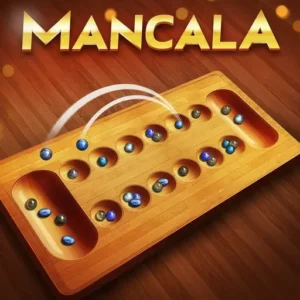
Each player starts with four seeds in every one of their six pits. Your goal is simple: collect more seeds in your store (the big cup on your right) than your opponent collects in theirs. On your turn, you pick one of your pits, scoop up all the seeds inside, and drop them one at a time into the following cups, moving counter-clockwise. You add a seed to your own store as you pass it, but never to your opponent’s store.
Two special rules turn this from a calm pastime into a real brain-teaser. If your last seed lands in your own store, you get another turn right away. And if your last seed lands in an empty pit on your side, you capture that seed plus every seed in your opponent’s pit directly across. Stacking these bonuses is where the game gets thinky fast.
Mancala Board and Visuals
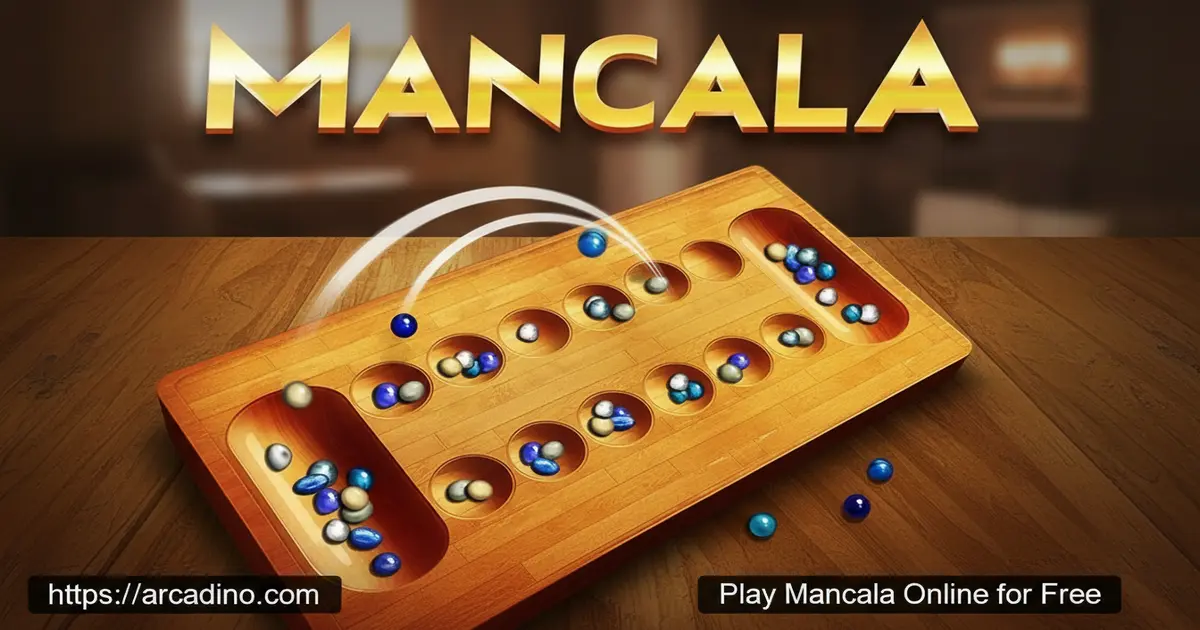
The online board uses a clean, top-down view with two rows of six pits and two larger end stores. Gems are bright and easy to count at a glance, which matters when you’re trying to plan three moves ahead. Animations are smooth without being slow, so chain turns feel satisfying instead of draggy.
Sound effects are minimal, mostly a soft click and a gentle clink as seeds drop into cups. That keeps the focus on strategy rather than flashy distractions. It’s the kind of presentation that respects the age of the game.
Single Player and Two-Player Modes
You can play Mancala against the computer or against a friend on the same device. The computer is a great way to learn the rules and get a feel for capture timing. Once you can beat it consistently, hand the keyboard to a sibling or classmate and try a real match. Pass-and-play games feel completely different from facing an AI, because humans set traps you’d never expect.
How to Play Mancala
Getting into a game takes about three seconds. Open the page, choose your mode, and you’ll see the board already set up with four gems in each of your six pits. Click any of your pits to scoop and sow, and the game handles the rest, including telling you when you’ve earned a bonus turn or made a capture. The match ends as soon as one player’s six pits are completely empty, and the other player sweeps any remaining seeds into their own store.
Mancala Controls
Controls couldn’t be simpler. Use the left mouse button to click the pit you want to play from on desktop. On mobile and tablets, just tap the pit with your finger. There are no keyboard shortcuts to memorize and no menus to dig through during a turn.
Tips and Tricks for Mancala
- Count the seeds in each pit before you click, because the exact number decides where your last seed lands.
- Hunt for moves that finish in your store, since the bonus turn is the biggest advantage in the game.
- Watch your opponent’s empty pits, because they could capture from you next turn if you fill the pit opposite.
- Set up captures by leaving one of your own pits empty while your opponent stacks seeds across from it.
- Don’t always empty your rightmost pit early, since holding seeds there gives you flexible scoring moves later.
The Famous First-Move Advantage and Best Opening
Here’s a wild fact: math experts have actually solved Mancala with computers. In standard Kalah rules, the player who goes first can always win with perfect play. The strongest opening move is to play your third pit from the left, which drops your last seed right into your store for a free bonus turn. From there, many strong players follow up by emptying their sixth pit to start chaining more turns. Don’t worry, the computer opponent won’t always play perfectly, so you’ve still got a real shot from either side. Try testing different opening pits in your first few games and see which one gives you the best chain. Learning one solid opening is the fastest way to start winning more matches.
Key Features of Mancala
- Authentic Kalah rules including the bonus-turn and capture mechanics
- Smart computer opponent for solo practice sessions
- Same-device two-player mode for face-to-face matches
- Clean board layout with easy-to-count gems
- Instant browser play on desktop and mobile, no install needed
Where to Play Mancala
The fastest way to enjoy Mancala is right here in your browser on Arcadino. The game loads on desktops, laptops, Chromebooks, and phones without any download or sign-up. Because it’s a lightweight HTML5 board game, it runs well even on older school computers, which is why teachers often use it for logic and math practice.
If you want a version on your phone for offline play, there are mobile apps available too. You can grab Mancala on Google Play for Android, or the Mancala Online app on the App Store for iPhone and iPad. Stick to these official stores instead of random APK sites, which can carry unsafe files.
For Parents
Mancala is one of the most parent-friendly games online. There’s no violence, no chat with strangers, and no in-app purchases inside the browser version. Kids practice counting, planning ahead, and basic probability every single turn, which lines up well with early math standards.
A typical match lasts five to ten minutes, so it fits neatly into homework breaks. Ages 7 and up usually pick up the rules within one or two games, and older kids enjoy the deeper strategy of chaining bonus turns.
How Mancala Builds Real Math and Brain Skills
Teachers love Mancala for a reason that goes way beyond fun. Every turn forces kids to count ahead, predict where seeds will land, and weigh two or three different moves against each other. That’s the same kind of thinking used in early algebra and logic puzzles. Studies on board games show that regular play can boost working memory, the part of your brain that holds numbers while you do quick math. Mancala also teaches patience, because rushing your move almost always costs you a capture. Best of all, kids don’t even notice they’re learning, since it just feels like winning at a cool game. Many schools use Mancala in math clubs and after-school programs for exactly these reasons.
Similar Games to Mancala
If you like the slow-burn strategy of Mancala, these classic board and logic games are worth a try.
- Checkers – A two-player capture game where you jump opponents to clear the board.
- Chess – The ultimate strategy board game with unique pieces and endless depth.
- Connect 4 – Drop discs and try to line up four in a row before your opponent does.
- Reversi – Flip your opponent’s tiles by trapping them between your own.
- Backgammon – Another ancient two-player game mixing dice rolls with sharp tactics.
Browse more in the Board Games category.
FAQs About Mancala
How do you play Mancala?
You scoop seeds from one of your pits and drop them one at a time into the cups going counter-clockwise. The goal is to end up with more seeds in your large store than your opponent has in theirs. Special rules give you a bonus turn or a capture if your last seed lands in the right spot.
How do you win at Mancala?
You win by collecting more seeds in your store than your opponent when the game ends. The match finishes the moment one player’s six pits are empty. Smart move order, bonus turns, and well-timed captures are what tip the balance.
How do you capture in Mancala?
You capture when your last seed lands in an empty pit on your side. You then take that seed plus every seed in your opponent’s pit directly across the board. All those seeds go straight into your store, and your turn ends.
Is Mancala a game of luck or skill?
Mancala is almost entirely a game of skill. There are no dice or shuffled cards, so every result comes from the choices both players make. With practice, a strong player will beat a beginner nearly every time.
Why is it called Mancala?
The name comes from the Arabic word naqala, meaning “to move.” That fits perfectly, since the whole game is about constantly moving seeds around the board. The game is believed to have started in the Middle East and Northern Africa.
Is Mancala free to play online?
Yes, Mancala is completely free to play in your browser on Arcadino. There’s no sign-up, no payment, and no download required. You can jump into a match against the computer in just a few seconds.
Is Mancala easy to learn?
Yes, most players learn Mancala in a single game. The rules fit on a small card, and the board only has fourteen spots total. Mastering the strategy, however, can take years of practice.
Final Thoughts on Mancala
Mancala blends simple rules, deep strategy, and a history that stretches back thousands of years into one quick, satisfying browser game. The capture rule and bonus-turn combos are what keep matches feeling fresh, even after dozens of games. Add in clean visuals and instant loading, and you’ve got a logic puzzle that’s perfect for short breaks or rainy afternoons. Pick a pit, sow your seeds, and see if you can outthink the computer before your row runs dry.
Gameplay Video