




















Watch one short ad and play ad-free for 30 minutes.
Reversi
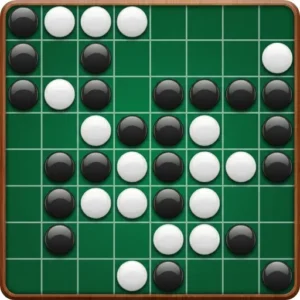
Various (public domain)If you love board games that look simple but hide deep strategy, Reversi is going to grab you fast. It’s a free online classic where you flip your opponent’s discs to your color, one careful move at a time. Also known as Othello, this 8×8 board game has been a favorite since the Victorian era and got reinvented in Japan in 1968. You can play it right in your browser, no downloads needed, and challenge a friend or the computer.
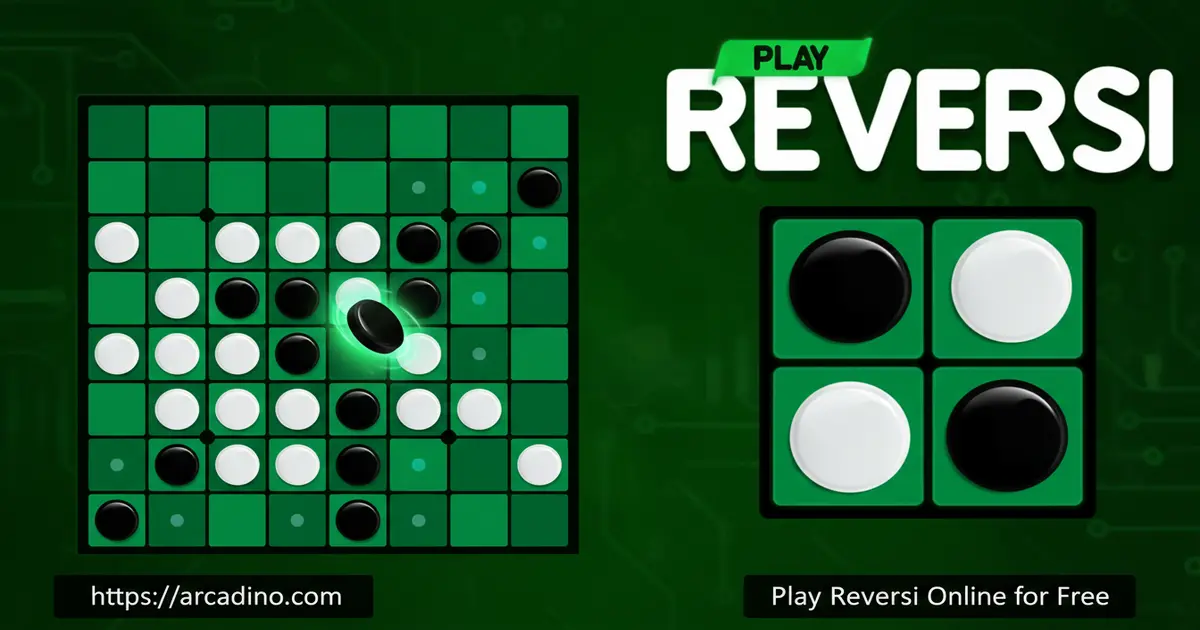
- Classic 8×8 board with 64 two-sided black and white pieces
- Single-player vs. computer or two-player hot-seat mode
- Helpful move hints show valid squares before you place
- Quick rounds that still pack serious strategic depth
What Is Reversi?
Reversi is a turn-based strategy board game where two players, one black and one white, fight to own the most discs when the board fills up. Every piece is black on one side and white on the other, so captured pieces literally flip and switch teams. The starting position places four pieces in the center: two black, two white. From there, every move has to sandwich at least one enemy disc.
What makes this title stand out is how a player who looks like they’re losing can suddenly flip the whole board in the final moves. Loading the browser version is fast, and the board renders cleanly on laptops and Chromebooks. I like how valid moves get highlighted with semi-transparent circles, so you’re never guessing where you’re allowed to play. 🙂
History of Reversi
Reversi has a surprisingly long backstory for such a quick game. It was patented in England in 1888 by Lewis Waterman, though a very similar game called The Game of Annexation appeared around 1870. The Victorian era loved parlor games, and Reversi rode that wave into homes across Britain. Then in 1968, a Japanese player named Goro Hasegawa tweaked the starting rules slightly and rebranded it as Othello, named after the Shakespeare play because of its black-and-white “drama.” That 1968 relaunch turned it into a global hit, with world championships still held every year.
Reversi Gameplay and the Capture Loop
The core loop is pure tug-of-war. You place a disc on an empty square so that one or more enemy discs sit in a straight line between your new piece and another piece of your color. That line can run horizontal, vertical, or diagonal. Every disc trapped in the middle flips to your color instantly.
You must capture something on every turn. If no capture is possible, you pass and your opponent goes again. The game ends when the board is full, both players pass, or somebody surrenders. Whoever has more discs of their color on the board wins, and final scores often swing in the last five moves.
A Quick Capture Example
Picture a row on the board like this: a black disc, then four white discs in a straight line, and an empty square at the end. If it’s your turn and you’re black, you drop a new black piece on that empty square. All four white discs trapped between your two black pieces flip to black in one move. The same trick works on diagonals and columns. One smart placement can flip a whole row at once, which is why late-game moves feel so dramatic.
Strategy and Difficulty Levels in Reversi
This is where the game gets juicy. Corners are the most powerful squares because a piece in the corner can never be flipped. Edges are strong too, but the squares right next to corners are traps – they often hand the corner to your rival. Smart players try to limit how many discs they have early so opponents have fewer pieces to capture.
Why are edge squares so valuable? A disc on the edge can only be flipped from along that same edge, since there’s no row of squares behind it for an opponent to sandwich. That makes edge pieces much safer than discs floating in the middle of the board, which can be captured from eight different directions. Lock down an edge and you build a wall that protects everything next to it.
Most online versions of this Othello-style game let you pick easy, medium, or hard computer opponents. Beginners should start on easy and turn on the flip-number hint to see how many discs each move would capture. Once you can beat the easy AI consistently, bump the difficulty up and start thinking two or three turns ahead.
Common Beginner Mistakes
Most new players lose because of the same handful of traps. The biggest one is grabbing the most flips every turn – that “greedy” strategy gives you tons of discs early, but every one of them becomes a target your opponent can flip back later. Watch out for X-squares, the diagonal squares right next to each corner. Playing on an X-square almost always lets your rival drop a piece in the corner on their next turn. C-squares, the two squares orthogonally next to a corner, are nearly as risky and should usually wait until the corner itself is claimed. Finally, don’t panic when your disc count looks low at move 20 – that’s often a winning position, not a losing one.
Reading the Board: Mobility vs Disc Count
Here’s the secret most beginners miss: in Reversi, having fewer discs in the middle of the game is often a good thing. What really matters is mobility – the number of legal moves you have available. The more highlighted squares you see on your turn, the more flexibility you’ve got. The fewer highlighted squares your opponent sees, the more they’re forced into bad moves. Try this simple drill: before you place a disc, count your opponent’s likely options for their next turn. If your move would leave them with only one or two legal squares, that’s usually stronger than a move that flips six discs but gives them eight choices back. Squeeze their options and the wins follow.
Two-Player Mode and Variations
Reversi shines as a two-player hot-seat game. You and a friend share one screen and take turns on the same device, which feels a lot like playing with a real Othello board. The browser version of this board game also includes piece-set and board-style options on some sites, so the look can change without altering the rules.
If the standard 8×8 grid feels too big or too small, there are wider, smaller, and tiny variations floating around online. The rules are identical – only the board size and starting setup shift. Some communities even play on 6×6 or 10×10 boards for a different pacing challenge.
How to Play Reversi
Getting started takes about thirty seconds. Open the game in your browser, pick your difficulty or choose two-player mode, and the four starting discs appear in the center automatically. Black always moves first. Click any highlighted square to drop your piece, and watch the sandwiched enemy discs flip.
Reversi Controls
Use your mouse to click a valid square on desktop. On mobile, tap the square where you want to place your disc. There are no keyboard shortcuts needed – the whole game runs on point-and-click input, which makes it friendly for younger players still building mouse skills.
Tips and Tricks for Reversi
- Grab the corners. Corner discs can never be flipped, so they anchor entire rows and diagonals for the rest of the match.
- Avoid the squares next to corners. Playing diagonally adjacent to an empty corner usually lets your opponent claim it on their next turn.
- Stay small early. Having fewer discs in the opening means fewer targets for your opponent to flip.
- Force passes. If you can leave your rival with no legal capture, they skip a turn and you get a free move.
- Use the hint toggle. Turning on flip-count hints shows exactly how many pieces each move grabs – perfect for learning patterns.
Key Features of Reversi
- Authentic 8×8 Othello rules with proper sandwiching and flipping mechanics
- Single-player matches against an AI with adjustable difficulty
- Two-player hot-seat mode for couch battles with a friend
- Valid-move indicators that make learning the rules painless
- End-game scoring that counts every disc on the board
Where to Play Reversi
The easiest way to enjoy this classic is right here in your browser – free, instant, and with no install required. It works in Chrome, Firefox, Safari, and Edge, and runs smoothly on school laptops and Chromebooks. Because the game is lightweight, it loads even on slower Wi-Fi.
If you’d rather play on the go, there are official mobile versions too. Grab the Android build on the Google Play Store or the iOS version on the App Store. Skip random APK downloads from third-party sites – they can carry malware and you don’t need them when official apps exist.
Reversi in the Classroom
Reversi is a quiet win for teachers and homeschool parents. The whole game runs on point-and-click input, so no keyboard shortcuts or audio cues are required – perfect for shared computer labs or noise-sensitive rooms. Matches usually finish in 5 to 10 minutes, which fits neatly inside a single class period with time left over to discuss strategy. Because the browser version is lightweight and ad-supported, it loads on locked-down school Chromebooks without needing installs, plug-ins, or admin permissions. Teachers can use it to introduce planning, spatial reasoning, and probability without any reading-heavy setup. Pair two students at one screen for a fast critical-thinking exercise that feels more like recess than homework.
For Parents
Reversi is a wholesome pick for kids ages 8 and up. There’s no violence, no chat feature, and no story content to worry about. The game actually builds useful skills – spatial reasoning, planning ahead, and weighing risk versus reward on every turn.
Matches usually wrap up in five to ten minutes, which makes it easy to set a play-time limit. The free browser version may show ads, and the mobile apps include optional in-app purchases to remove them, so parents may want to play the first session together.
Similar Games to Reversi
If the disc-flipping strategy of this board classic clicks with you, there are plenty of related games worth trying online.
- Chess – The ultimate strategy board game, with corner control and long-term planning just like Reversi.
- Checkers – Another 8×8 board favorite where capturing opponent pieces decides the winner.
- Mancala – A classic counting-and-capturing game that rewards thinking ahead.
- Super Tic Tac Toe – A bigger, smarter version of the schoolyard staple with nested boards.
- Sudoku – Pure logic puzzles for players who love quiet, strategic thinking.
- Strategic Tic-Tac-Toe – A deeper take on the classic grid game that rewards thinking several moves ahead.
Browse more brain-teasers in our Board Games category.
FAQs About Reversi
How do you play Reversi?
You place discs to sandwich your opponent’s pieces between two of yours. Any enemy discs trapped in that horizontal, vertical, or diagonal line flip to your color. Every move must capture at least one enemy disc, and the player with the most discs when the board fills up wins.
Is Reversi the same as Othello?
Yes, Reversi and Othello are essentially the same game. Othello is the commercial name trademarked in the 1970s, while Reversi is the older version patented back in 1888. The rules are nearly identical, with only tiny differences in the opening setup.
How do you win at Reversi?
Win by controlling the corners and limiting your discs early in the game. Corners can never be flipped, so they lock in points for the rest of the match. Avoid placing pieces next to empty corners, and try to force your opponent into positions where they can’t capture.
Is Reversi free to play online?
Yes, Reversi is completely free to play in your browser. There’s no sign-up, no download, and no payment required. Mobile versions on iOS and Android are also free, though they may show ads.
Can I play Reversi against a friend?
Yes, most online Reversi versions include a two-player hot-seat mode. You and a friend take turns on the same device, sharing the mouse or touchscreen. Some sites also offer online multiplayer matchmaking.
What’s the best opening move in Reversi?
Reversi opening theory is surprisingly deep, with named lines like the Diagonal, Perpendicular, and Parallel openings. For beginners, don’t worry about memorizing them – just focus on mobility. Pick early moves that give you lots of future options and leave your opponent with fewer legal squares. Avoid spreading too wide too fast.
How long does a Reversi game last?
A typical Reversi match runs about 5 to 10 minutes. Games end when the 64-square board fills up, both players pass, or someone surrenders. Quick rounds make it easy to play several matches in one sitting.
Ready to Flip the Board?
Reversi mixes a five-minute rule book with a lifetime of strategic depth. Between corner control, last-second comebacks, and the satisfying click of a long row flipping to your color, it’s the kind of board game you’ll keep coming back to. Pick easy mode for your first match, then climb the difficulty ladder as your strategy sharpens – your first win against the hard AI feels amazing.
Gameplay Video