






Watch one short ad and play ad-free for 30 minutes.
Pac Man
Google
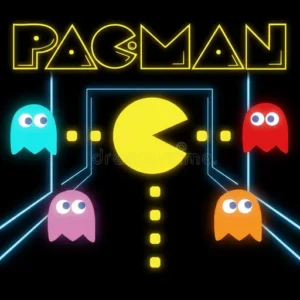
Few arcade legends have lasted 45 years and still feel this electric. Pac-Man is free to play online right now — no installs, no accounts, just you versus the maze. The idea of a pizza missing a slice inspired one of gaming’s most recognizable characters ever. That single design choice launched a franchise that kids and parents still love together today. 🎮
What makes this game so sticky isn’t just nostalgia. The ghost AI, the power pellets, the frantic turning through tight corridors — every mechanic works together brilliantly. Here’s what to expect before you start munching.
- Classic arcade action — dodge four uniquely-behaving ghosts through iconic maze layouts
- Power pellet mechanic — flip the chase and hunt down ghosts for bonus points
- Instantly recognizable characters — Blinky, Pinky, Inky, and Clyde each move differently
- Free browser play — jump in at arcadino.com with zero downloads required
What Is Pac-Man?
Pac-Man is a maze-chase action game created by Toru Iwatani at Namco, first released in arcades in 1980. The goal is simple: guide the yellow, chomping character through a maze, eat every pellet, and avoid four colourful ghosts. It was originally called Puck Man in Japan, but Namco America renamed it before the Western release. The character was designed to be cute and colourful — specifically to appeal to younger players and female audiences who weren’t playing arcade games at the time.
The game’s visual design came from two unexpected places: a pizza with one slice removed, and the rounded shape of the Japanese character 口 (kuchi), meaning “mouth.” That combination gave Toru Iwatani a character that felt both hungry and friendly. Interestingly, the very first cabinet artwork — painted by artist Tadashi Yamashita — showed Pac-Man with a Pinocchio-like nose, rosy cheeks, and a more detailed face. Over time, those features were stripped away, leaving the clean, simple circle with a chomping mouth that the whole world now recognises. That simplification was a smart move: the plainer design is easier to animate and far more iconic. Playing it in the browser today, the controls respond instantly — the input lag is almost nonexistent, which matters a lot when you’re making split-second turns in tight corridors. The maze is clean and readable even on smaller screens, making it genuinely comfortable to play without squinting.
Pac-Man was built during a really exciting time for Namco. Development started in 1979, the same year Namco released Galaxian — their first game to use an RGB colour display. Working on both projects at once pushed the team’s technical skills fast. That experience with colour graphics helped make Pac-Man’s bright, cheerful look possible right from the start.
Pac-Man Gameplay — The Maze, The Pellets, The Chase
The core loop of Pac-Man is beautifully tight. You move through a maze eating small dots called pellets, and clearing every single one advances you forward. Four ghosts — Blinky, Pinky, Inky, and Clyde — actively pursue you through the corridors, each with its own movement pattern and personality. Touch any ghost and you lose a life; run out of lives and the game ends.
Scattered at the maze’s four corners are larger dots called power pellets. Eating one temporarily turns all four ghosts blue and vulnerable — suddenly you’re the predator. Chasing down a frightened ghost earns bonus points, and eating multiple ghosts in one power pellet session multiplies your score fast. That reversal mechanic is what gives Pac-Man its incredible tension and replay value, even after 45 years.
The Ghosts of Pac-Man — Four Enemies, Four Strategies
Blinky, Pinky, Inky, and Clyde aren’t just decoration — they each behave differently, and understanding that is key to surviving longer. Blinky chases you directly and aggressively, always shadowing your position in the maze. Pinky tries to cut you off by targeting tiles ahead of your current direction, which catches new players off guard constantly.
Inky is the trickiest ghost to predict. His target tile is calculated using both your position and Blinky’s current location — the game draws an imaginary line between the two and projects it forward to find Inky’s destination. In practice, this means Inky can appear from an unexpected direction even when you think you’ve read the maze correctly. A good counter is to stay aware of where Blinky is, because that directly affects where Inky will head next. Clyde alternates between chasing you and retreating to his corner, making him unpredictable in a different way. Once you start reading their patterns, the game shifts from pure reaction to something more like puzzle-solving at high speed. That depth is exactly what kept Pac-Man in arcades for years and keeps it thriving online today.
Ghost Scatter Mode — Your Hidden Safe Windows
Here’s something most players don’t know: the ghosts don’t chase you every single second. The game runs on a hidden chase/scatter cycle that switches back and forth throughout each level. During scatter mode, each ghost stops hunting you and heads to its own fixed corner of the maze — Blinky goes top-right, Pinky top-left, Inky bottom-right, and Clyde bottom-left. These scatter phases only last a few seconds, but they create brief safe windows where you can clear pellets without four enemies breathing down your neck. Early levels have longer scatter phases, so beginners get more breathing room. As you progress, scatter phases shorten and the chase phases get longer and faster. Learning to feel when scatter mode kicks in — and using that moment to dart through a risky section — is one of the biggest skill upgrades you can make.
Pac-Man Beyond the Maze — A Franchise That Never Stopped
Pac-Man isn’t just a game — he’s Bandai Namco’s official mascot and one of the most recognised fictional characters on the planet. The yellow chomper starred in his own animated TV series back in 1982, produced by Hanna-Barbera, which ran for two seasons and gave the ghosts even more personality. Decades later, Pac-Man appeared in the 2015 film Pixels alongside other classic arcade characters. The franchise has also stretched into some surprising game spin-offs: Pac-Pix let Nintendo DS players draw Pac-Man shapes to eat ghosts, while the Pac-Man World series turned the maze into a full 3D platformer adventure. There are Pac-Man board games, toys, clothing lines, and even a theme park ride. It’s a reminder that a great game character can grow far beyond its original maze.
Pac-Man 256 — The Endless Maze Spin-Off
PAC-MAN 256 is a separate, modern twist on the classic formula — and it’s also available to download on mobile (find the store links in the Where to Play section below). Created by the team behind Crossy Road, it turns the maze into an endless vertical runner that never stops scrolling. The catch is the Glitch: a corrupted wave rising from the bottom of the screen that will destroy you if you fall behind.
PAC-MAN 256 was nominated for Best Mobile/Handheld Game at The Game Awards 2015, which gives you a sense of how well it was received. It also introduced power-ups beyond the classic pellet, adding lasers and other tools to the mix. If you love the original’s energy but want something that escalates infinitely, this spin-off is worth downloading on Android or iOS.
Classic Pac-Man vs. PAC-MAN 256 — Which One Is Right for You?
Both games are great, but they scratch different itches — so it helps to know which one suits you before you dive in. The classic browser version is all about mastering a fixed maze: you’re chasing a high score, learning ghost patterns, and clearing pellets room by room. Sessions are short and satisfying, usually wrapping up in under ten minutes if the ghosts get you. PAC-MAN 256 is the opposite — there’s no maze to fully clear, no fixed score target, and the pressure never lets up because the Glitch wave never stops rising. It rewards fast reactions and power-up combos over pattern memorisation. If you’re new to Pac-Man, start with the classic version to learn the basics. If you already love the original and want something that escalates forever with no ceiling, PAC-MAN 256 is your next step.
Pac-Man and the Google Doodle — A Cultural Moment
On May 21, 2010, Google replaced its homepage logo with a fully playable Pac-Man game to celebrate the franchise’s 30th anniversary. It was one of the very first interactive Google Doodles ever created, and it ran for 48 hours on the world’s most visited website. The response was enormous: the web analytics firm RescueTime estimated the Doodle cost employers around $120 million in lost productivity, as millions of workers played it on the clock. That figure became one of the most widely cited stats in gaming culture history. The Doodle featured the original maze, all four ghosts, and even a two-player mode where Ms. Pac-Man joined in. It remains playable today at google.com/doodles, making it one of the few pieces of gaming history you can revisit any time for free.
How to Play Pac-Man
Getting started with Pac-Man takes about ten seconds. Head to arcadino.com, find the game, and it loads right in your browser. Your only job is to move Pac-Man through the maze, eat all the pellets, and stay away from the ghosts. Eat a power pellet in the corner to temporarily flip the situation and chase the ghosts instead.
The game’s difficulty climbs as you clear mazes — ghosts move faster and the windows for safe movement get smaller. Starting out, focus on clearing one side of the maze before crossing to the other. Keeping a mental map of where each ghost is will help you survive much longer than just reacting randomly.
Pac-Man Controls
Use the arrow keys on your keyboard to move Pac-Man up, down, left, and right through the maze. On mobile devices, tap the screen in the direction you want to move. The controls are responsive and require no configuration — you’ll be navigating the maze within seconds of loading the game.
Input Buffering — The Trick That Smoother Players Use
Here’s a skill that separates beginners from smoother players: input buffering. Pac-Man doesn’t just respond to presses exactly at a junction — the game actually remembers your last directional input for a brief moment before you reach a turning point. That means you can press the direction you want to turn slightly early, and Pac-Man will queue the turn and execute it the instant he reaches the corner. Players who tap inputs at the last second often miss turns and crash into walls. Players who press a little early flow through corners cleanly and keep their speed up. Once you start pre-buffering your turns, navigating tight corridors feels much smoother and you’ll waste far fewer lives on fumbled corners.
Tips and Tricks for Pac-Man
- Learn each ghost’s pattern: Blinky follows you directly, so moving unpredictably helps shake him. Pinky targets ahead of you, so reversing direction briefly can throw him off.
- Save power pellets strategically: Don’t eat a corner pellet the moment you see it. Wait until at least two or three ghosts are nearby so you can chase multiple targets in one session.
- Use the tunnel exits: The side tunnels in the classic maze let you wrap around to the other side — ghosts slow down inside these tunnels, giving you a useful escape route.
- Chain ghost points: Eating the first ghost after a power pellet scores 200 points. The second scores 400, the third 800, and the fourth 1,600 — always chase multiples.
- Clear corners last: The power pellets sit in the corners. Eat the pellets in the middle of the maze first, so you still have escape options when the ghosts close in.
Key Features of Pac-Man
- Ghost personality system: Each of the four ghosts — Blinky, Pinky, Inky, and Clyde — uses a distinct AI behavior, making encounters feel different every time.
- Power pellet reversal: Eating a corner power pellet turns all four ghosts blue and vulnerable, flipping the entire dynamic of the chase.
- Score multiplier for ghost chains: Each consecutive ghost eaten during one power pellet session doubles the points, rewarding bold, high-risk play.
- Iconic maze design: The original maze layout is a masterclass in game design — every path, intersection, and corner was placed to create natural tension.
- 45 years of legacy: Since its 1980 debut, Pac-Man has remained one of gaming’s most recognized characters, with Toru Iwatani’s original vision still intact in modern versions.
Where to Play Pac-Man
You can play Pac-Man free in your browser at arcadino.com — it loads instantly and runs smoothly without any downloads or sign-ups required. The browser version works on desktop and laptop computers, and no additional software is needed. It’s also accessible on the arcadino.com site without any network restrictions blocking your fun.
If you want to take the Pac-Man experience on the go, PAC-MAN 256 is available on both Android and iOS. Download it from the Google Play Store or the Apple App Store for the full mobile version. Stick to official store downloads only — unofficial APK files from random websites can contain harmful software, so always download from trusted sources.
For Parents
Pac-Man is one of the most age-appropriate games available — it contains zero violence, no inappropriate language, and no online chat features. The game was originally designed in 1980 to appeal to younger players and families, and that philosophy is still visible in its cheerful characters and simple objective. It genuinely sharpens spatial reasoning and quick decision-making as kids learn to read the ghost patterns.
The classic browser version has no in-app purchases and no ads that interrupt gameplay. PAC-MAN 256 on mobile may include optional purchases, so it’s worth checking those settings if your child is playing on a phone or tablet. A natural play session lasts around 5–15 minutes, making Pac-Man easy to pick up and put down without frustration over unfinished progress.
Similar Games You’ll Love
If the maze-chase thrills of Pac-Man have you hooked, these related titles are worth exploring next.
- Pac-Man 256 — The endless maze spin-off from the Crossy Road team, where a rising Glitch wave forces you to keep moving forward forever.
- Ms Pac-Man — The classic sequel featuring updated maze layouts and a slightly different ghost behavior set that freshens up the original formula.
- Pac-Man 99 — A battle royale twist on the original, where 99 players race through mazes simultaneously and send ghosts to rival screens.
Love fast-paced action games? Browse more in the Arcade category.
FAQs About Pac-Man
What does Pac-Man symbolize?
Pac-Man symbolizes appetite and the act of eating, inspired by food. Creator Toru Iwatani’s primary inspiration was a pizza with one slice missing, which suggested a round, chomping character. The four ghosts — Blinky, Pinky, Inky, and Clyde — were added to create challenge and strategy rather than represent any deeper concept. Together, they turned a simple eating mechanic into a tense, dynamic chase.
Why was Puck Man changed to Pac-Man?
The name changed because Namco America feared vandals would alter the “P” in Puck Man to an “F.” Before releasing the game to Western distributors, Namco America made several localization changes, including renaming the title. The ghost names were also updated for the American release at the same time. The new name “Pac-Man” stuck globally and became one of gaming’s most famous brand identities.
What was Pac-Man originally based on?
Pac-Man was based on a pizza with a slice removed and the Japanese character 口 (kuchi), meaning “mouth.” Toru Iwatani combined both images to create a character that looked naturally hungry and expressive. The round, open-mouthed design was also chosen to feel cute and approachable — specifically to attract younger players and women to arcades in 1980.
Can I play Pac-Man free online?
Yes, Pac-Man is completely free to play in your browser. You can load it directly at arcadino.com with no account or download needed. The browser version runs smoothly on desktop and laptop computers. For mobile play, PAC-MAN 256 is the recommended download on Android and iOS.
What is Pac-Man 256?
PAC-MAN 256 is an endless maze runner spin-off created by the Crossy Road team. Instead of a fixed maze, the screen scrolls upward infinitely while a corrupted Glitch wave rises from below. It was nominated for Best Mobile/Handheld Game at The Game Awards 2015. You can download it from the Google Play Store or Apple App Store.
Who created Pac-Man?
Toru Iwatani created Pac-Man at Namco, with development beginning in 1979. The game launched in Japanese arcades in 1980 under the name Puck Man before its Western release. Namco — now known as Bandai Namco — has remained the publisher of the franchise ever since. Pac-Man has grown into one of the most recognized fictional characters in the entire world.
How is Pac-Man’s 30th anniversary connected to Google?
Google celebrated Pac-Man’s 30th anniversary on May 21, 2010 with a fully playable Doodle on the Google homepage. It was one of the first interactive Google Doodles ever created, running for 48 hours on the world’s most visited website. Analytics firm RescueTime estimated the Doodle cost employers around $120 million in lost productivity, as millions of people played it during work hours — making it one of the most talked-about moments in gaming culture that year. The Doodle remains playable at google.com/doodles, so you can experience it any time you like.
Conclusion
Pac-Man earns its legendary status every single time you play. The ghost personality system keeps every run feeling different, and the power pellet reversal creates moments of genuine excitement that newer games struggle to replicate. Toru Iwatani’s original design — born from a pizza slice and a Japanese character for “mouth” — turned out to be one of the greatest game concepts ever created.
Whether you’re discovering the maze for the first time or returning after years away, fire up Pac-Man at arcadino.com and see how many ghosts you can turn blue in a single run. The high score table is waiting for your name.
Gameplay Video