








Watch one short ad and play ad-free for 30 minutes.
Doodle God
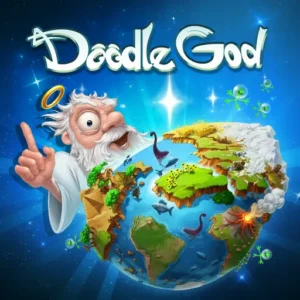
JoyBitsImagine starting with just four tiny elements – fire, earth, wind, and water – and ending up with dragons, skyscrapers, and entire civilizations. That’s the wild promise of Doodle God, a free browser puzzle game from JoyBits where you literally play creator. It’s often confused with Google Doodle games, but this is a totally separate alchemy-style title with its own loyal fanbase. Mix two elements, watch them react, and slowly piece together a universe one combo at a time. 🌍
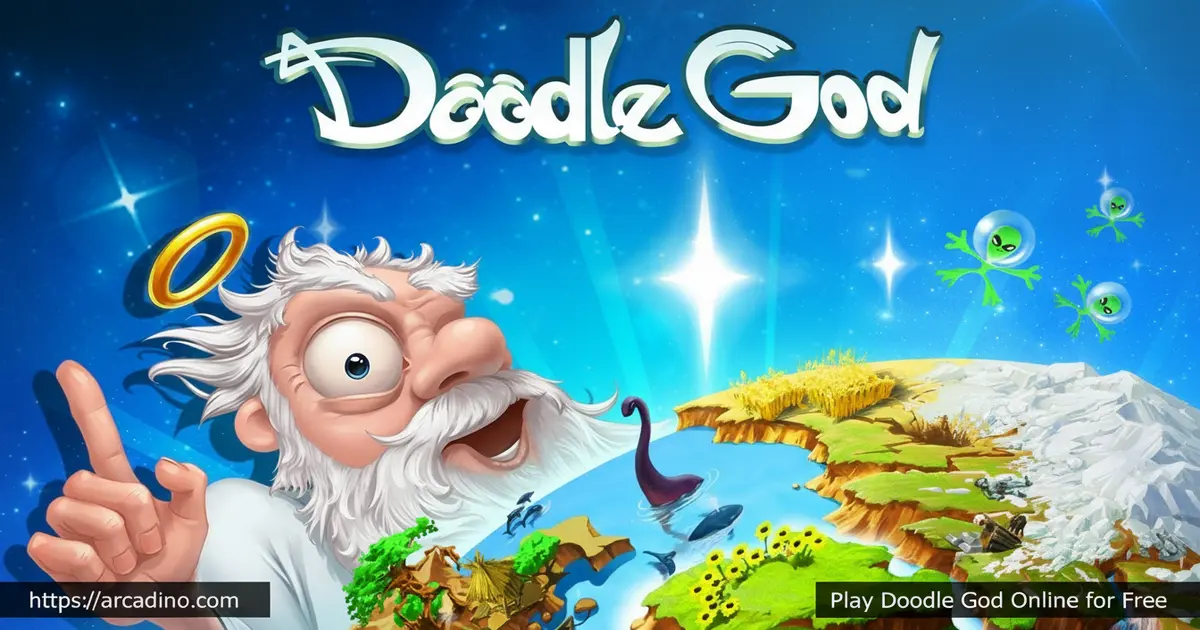
- Combine 4 starter elements into 300+ advanced items
- Unlock Planet, Mission, Quests, Puzzle, and Artifacts modes
- One-click controls that work on any browser or phone
- Funny philosopher quotes pop up after every discovery
What Is Doodle God?
Doodle God is a logic-based crafting puzzle made by JoyBits. Your job sounds simple: smash two elements together and see what happens. Air plus fire makes energy. Earth plus water makes swamp. From there, things spiral fast into life-forms, tools, weather, and even zombies.
What I really like about playing this title in a browser is how light it feels. The one-click interface loads almost instantly, and there’s no clunky menu to fight. You just drag, click, and read the witty quote that pops up. It’s a chill puzzler you can dip into for five minutes or get lost in for an hour.
You’re in good company too. Doodle God has been played by over 170 million people worldwide across browser, mobile, and Steam. It picked up Apple’s REWIND award, Best of Year on Kongregate, and Game of the Year from JayIsGames. That’s a stack of badges most browser puzzles never come close to earning.
Doodle God Gameplay
The core loop is pure discovery. You start with the four classic elements and a blank list. Each successful combo adds a new item to your encyclopedia, which you can then mix with everything else you own.
Some reactions are obvious – fire plus water equals steam. Others are sneaky and hilarious. Inventing the wheel might trigger a zombie plague, because the game loves unintended consequences. That “wait, what just happened?” moment is what keeps players clicking.
Game Modes in Doodle God
This isn’t just one big element list. Doodle God packs several modes that change how you play:
- Planet Mode – watch your world animate as you create things on its surface.
- Mission Mode – tackle specific puzzle goals instead of free creation.
- Quests Mode – save a princess or escape a desert island using element logic.
- Puzzle Mode – build locomotives, skyscrapers, and other complex objects.
- Artifacts Mode – chain triple reactions to collect things like Stonehenge.
Achievements and the Elements Encyclopedia
Every new element you unlock lands in a built-in encyclopedia, sometimes with Wikipedia links so you can read real-world background. There’s also an achievements list that rewards big milestones and tricky combos. Hundreds of philosopher and comedian quotes pop up between discoveries, which makes grinding feel less like grinding.
How to Play Doodle God
Getting started takes about ten seconds. Open the page, see the four base elements, and click one to select it. Then click another element to combine them. If the mix works, a new item slides into your list with a little fanfare.
If nothing happens, no penalty – just try a different pair. The whole point is experimenting. There are 300+ items to find, so don’t expect to wrap things up in one sitting.
Doodle God Controls
Controls are about as simple as puzzle games get. On desktop, use your mouse to click and drag elements together. On mobile, tap one element, then tap another to combine. That’s literally it – no keyboard, no shortcuts, no fuss.
Starter Combo Cheat Sheet: Your First 15 Recipes
Stuck on the early combos? This list gets you from four boring starters to a living world fast. Try these in order and you’ll unlock most of the foundation chain in under ten minutes:
- Air + Fire = Energy
- Earth + Water = Swamp
- Air + Water = Steam (or Rain)
- Fire + Earth = Lava
- Swamp + Energy = Life
- Life + Earth = Beast
- Life + Beast = Human
- Fire + Stone = Metal (Stone comes from Lava + Water)
- Water + Sand = Clay (Sand = Stone + Air)
- Human + Stone = Tool
- Human + Beast = Domestic Animal
- Earth + Life = Plant
- Plant + Earth = Grass
- Water + Water = Sea
- Sea + Sand = Beach
Once you’ve got Human, Metal, Tool, and Clay, almost every later chain – weapons, buildings, vehicles, even magic – opens up. Save those four for last when you’re stuck.
Tips and Tricks for Doodle God
- Try every pair early – in the first hour, brute-forcing combos is faster than overthinking. The element list is still small.
- Think in real-world logic – life plus earth makes a beast, fire plus stone makes metal. Real-world cause and effect usually works.
- Use hint quotes – the philosopher quotes that appear after a discovery sometimes hint at what to try next.
- Don’t ignore weird stuff – swamp, dust, and bacteria look useless but unlock huge chains later.
- Check the encyclopedia – it tracks what you’ve made and which elements are still untouched, so you stop wasting clicks on dead ends.
Key Features of Doodle God
- Over 300 craftable items, from microorganisms all the way to armies and aliens
- Animated Planet mode that visualizes your creations on a living world
- Five gameplay modes (Planet, Mission, Quests, Puzzle, Artifacts) under one roof
- Built-in elements encyclopedia with reference links for curious players
- Witty quotes from real philosophers and comedians sprinkled between discoveries
Available in 13 Languages
Doodle God ships in 13 languages, so most players can read every quote and element name in their own tongue. The full list covers English, Dutch, French, Spanish, Italian, Russian, Japanese, Chinese, Korean, Portuguese, Swedish, Polish, and German. You can switch the language right from the settings menu before you start a new save. That makes it a great pick for bilingual households or language classes.
Browser Performance and Accessibility
The browser version runs on modern HTML5, so it works without Flash and loads in just a few seconds on most connections. It’s light enough to run smoothly on low-spec Chromebooks, older laptops, and budget tablets. Because every action is a single click or tap, there’s no keyboard required at all. That makes it usable one-handed, with a touchscreen, or with most assistive input devices like switch controls and adaptive mice. There are no flashing animations or loud surprise sounds, so it’s gentle on kids who get overwhelmed by busy games.
Great for Classrooms and Homeschool
Teachers and homeschool parents love Doodle God as a quick logic warm-up. The game quietly reinforces basic chemistry (water + fire = steam), ecology (life + earth = plant, plant + time = forest), and cause-and-effect reasoning. It’s also a sneaky vocabulary builder thanks to the encyclopedia entries. A solid 15-minute Chromebook session works well as a brain starter before science or critical-thinking lessons. Since there’s no login, no chat, and no ads in the core version, it slots cleanly into school filters and Google Classroom routines.
Where to Play Doodle God
The easiest way to jump in is right here in your browser – no download, no account, no waiting. Doodle God runs on Chrome, Firefox, Safari, and Edge, and it works on Chromebooks too, so it’s a solid pick for school laptops when puzzle games are allowed.
If you want to play offline, JoyBits has official mobile apps. Grab Doodle God on Google Play for Android or on the App Store for iPhone and iPad. Stick to those official stores – random APK sites can hide malware.
There’s also a Steam version with very friendly system requirements. You’ll need Windows 7 or later, a 1 GHz processor, 2 GB of RAM, about 1 GB of storage, and DirectX 11. Mac and Linux builds run on similar low specs, so almost any laptop from the last decade can handle it.
For Parents
Doodle God is a creative logic puzzle that genuinely rewards thinking. Kids learn cause-and-effect, real-world combinations (water + earth = plant, for example), and a little science along the way. Some parents have flagged that a few late-game elements touch on themes like alcohol or weapons, so it sits best with kids around 10 and up.
The browser version has no chat or open social features, which keeps things safe. Mobile versions may include in-app purchases for hint packs, so check settings before handing over a phone. Sessions are easy to cap at 20-30 minutes since each new element feels like a natural stopping point.
The Doodle God Series: Which One Should You Play Next?
JoyBits has built a whole family of Doodle games, and each one twists the formula in a different direction. Here’s a quick guide so you pick the right next title:
- Doodle God – the original. Build the universe from four elements.
- Doodle God 2 – bigger sequel with reworked modes and more elements.
- Doodle God Blitz – faster, snackier version with daily challenges and timed puzzles.
- Doodle God: 8-bit Mania – retro pixel-art remix with a chiptune soundtrack.
- Doodle Devil – the evil mirror. Craft sins, demons, and chaos instead of life.
- Doodle Kingdom – medieval spin-off where you raise a kingdom and fight dragons.
- Doodle Mafia – 1920s gangster theme. Mix gangsters, weapons, and crime empires.
- Doodle Tanks – combine parts to design and battle custom war machines.
- Doodle Creatures – mix two animals to invent strange hybrid beasts.
- Doodle Farm – breed animals to populate a cute farm.
If you loved the chill discovery vibe, try Blitz or Creatures. If you want story and stakes, jump to Kingdom or Mafia.
Similar Games to Doodle God
If element-mixing and creative crafting hooked you, these browser puzzles scratch the same itch:
- Little Alchemy – another beloved combine-everything puzzler with a cleaner, minimalist look.
- Doodle Devil – JoyBits’ darker spin-off where you craft sins and chaos instead of life.
- Doodle Farm – same studio, same idea, but you breed animals to populate a farm.
- Doodle God 2 – the bigger sequel with more elements and reworked modes.
Browse more brain teasers in our Puzzle collection.
FAQs About Doodle God
Is Doodle God the same as Google Doodle games?
No, Doodle God is a separate puzzle game by JoyBits. Google Doodles are interactive art pieces on Google’s homepage, while Doodle God is a standalone alchemy puzzle you can play in a browser or download on iOS and Android. The names sound alike, but the games are unrelated.
How long does it take to beat Doodle God?
The main story takes about 3-4 hours on average. If you want every extra and side quest, expect closer to 5-6 hours. Completionists who hunt every single element and achievement usually clock around 7 hours total.
How do you make a human in Doodle God?
The classic recipe is Life + Beast = Human. To get there, first make Life (Swamp + Energy) and Beast (Life + Earth). Some versions also accept Life + Clay, where Clay comes from Water + Sand (and Sand comes from Stone + Air). Human is one of the early milestone discoveries that opens up tools, weapons, and society chains.
Is Doodle God free to play?
Yes, Doodle God is free to play in your browser. The mobile and Steam versions may cost a small amount or include optional in-app purchases for hints. The browser edition needs no sign-up and no payment.
How many elements are in Doodle God?
The original Doodle God has over 300 elements to discover. You start with just four – fire, earth, wind, and water – and unlock everything else through combinations. Sequels and spin-offs add even more.
How many Doodle God games are there?
The Doodle God series has 13 official titles from JoyBits: Doodle God, Doodle God 2, Doodle God Blitz, Doodle God: 8-bit Mania, Doodle Devil, Doodle Farm, Doodle Kingdom, Doodle Creatures, Doodle Mafia, Doodle Tanks, Doodle History, Doodle Hunters, and Doodle Pirates. Each one keeps the mix-and-discover loop but swaps in a fresh theme.
Ready to Build a Universe?
Doodle God turns a four-element starter kit into hours of “wait, that worked?” surprises. Between Planet mode’s living world, the quote-filled discovery rhythm, and 300+ items waiting to be combined, it’s one of those rare puzzles that’s both relaxing and brain-stretching. Open it up, click two elements together, and see how far your inner creator can take things.
Gameplay Video