














Watch one short ad and play ad-free for 30 minutes.
Threes
Sirvo LLC (Asher Vollmer, Greg Wohlwend, Jimmy Hinson)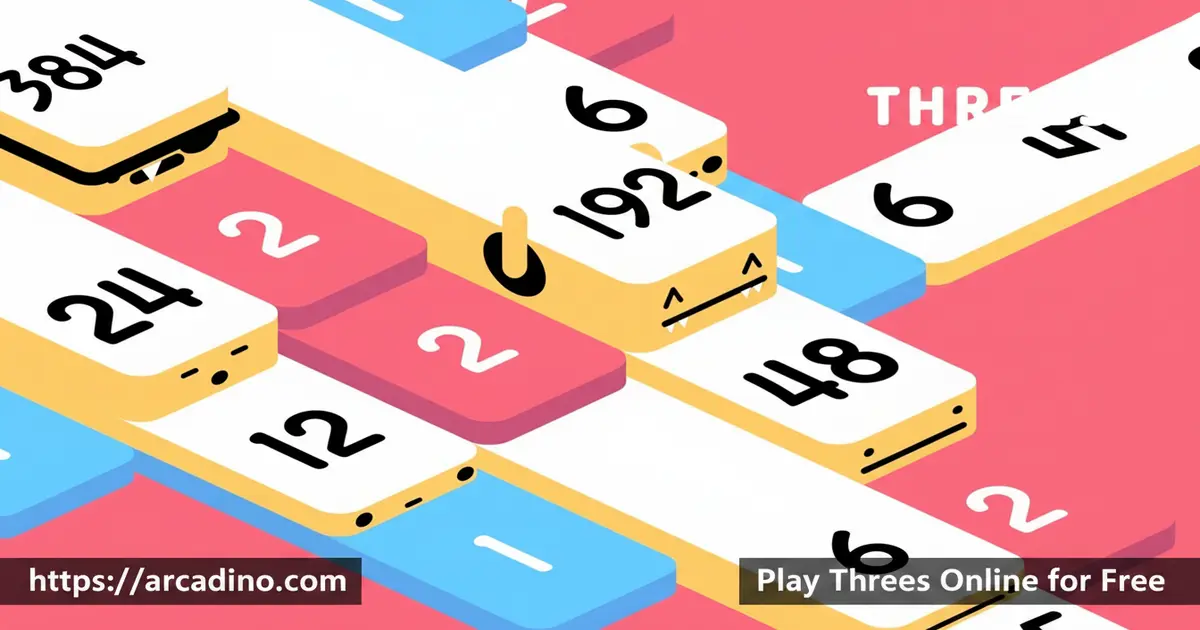
Before 2048 ever existed, there was Threes. This clever little puzzle game is free to play right now in your browser, and it’s been quietly earning fans ever since it launched on iOS. It combines dead-simple math with surprisingly deep strategy. If you’ve ever wondered where the whole tile-merging craze actually began, this is your answer. 🧩
The goal sounds easy: slide numbered tiles together to build bigger numbers. But the rules are specific, and the grid fills up faster than you’d expect. Every move matters in a way that keeps you thinking several steps ahead.
- Classic tile-merger: The original puzzle that inspired the 2048 craze.
- Unique combining rules: Only 1 and 2 can join to make 3 — everything else doubles.
- Score tracking: The game saves your best score, best tile, and best solve time.
- Instant browser play: No download or account needed to start a game.
What Is Threes?
Threes is a puzzle game played on a 4×4 grid of numbered tiles. It was created by the makers of PUZZLEJUICE and was honorably mentioned for Excellence in Design by the Independent Games Festival. The concept is simple: slide tiles into each other to combine them and push for the highest possible score before the grid locks up.
What sets this title apart from other tile-puzzles is its specific combining rule. A 1 and a 2 merge into a 3, and from there every pair of matching multiples of 3 can combine. That one small rule creates an enormous amount of tactical depth. The grid fills quickly, and every swipe you make shifts every tile on the board at once.
Playing it in the browser, the controls respond instantly with zero input lag — each swipe or arrow key press registers cleanly without any hesitation. That tight, immediate feedback is part of what makes the game feel so satisfying to play, even in short sessions.
The Design Story Behind Threes
Threes wasn’t built in a weekend — it was reportedly in development for well over a year before it launched. That’s a long time for a mobile puzzle game, and it shows in how carefully every rule is crafted. The creators kept asking one key question: how do you make a tile game that never feels like it can be solved on autopilot? Their answer was the 1+2=3 rule. By making the very first merge work differently from every other merge, they forced players to think about two separate systems at once — managing low-value tiles and growing high-value chains. That deliberate friction is exactly what earned the game its Independent Games Festival design recognition, and it’s what keeps experienced players still finding new patterns after hundreds of games.
Threes Gameplay — How the Grid Works
Every game starts with a handful of tiles on the 4×4 grid, mostly 1s, 2s, and small 3-multiples. When you swipe a direction, every tile on the board slides that way at once. If two matching tiles collide under the right conditions, they merge into a single higher-value tile. A new tile drops onto the board after every move.
The game ends the moment no more merges are possible and no empty spaces remain. Your final score is the total sum of all tile values left on the board. The highest tile reported by players in the community is 12,288, which requires serious planning and a solid understanding of how tiles flow across the grid.
Graphics and Audio in Threes
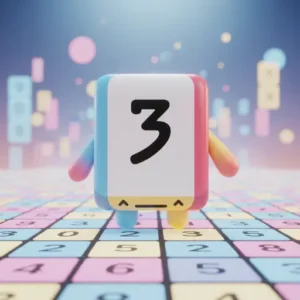
The visual design of this puzzle is clean and purposeful. Each tile has a distinct color and personality, making it easy to read the board at a glance without squinting at numbers. The art direction is polished and calm rather than flashy, which suits the thoughtful pace of the gameplay perfectly.
The music is whimsical and carefully crafted — it adds a light, playful atmosphere without distracting from the mental math you’re doing. It’s the kind of soundtrack you actually want to leave on while you play, rather than mute after the first minute.
Score Tracking and Progression in Threes
There are no levels or unlocked stages in Threes — progression is all about beating your own records. The game saves your all-time best score, your highest-ever tile value, and your best solve time. Those three stats give you concrete goals to chase every single session.
This personal leaderboard approach keeps the replay value high. Shaving a few points off your best solve time or finally cracking a new high tile both feel genuinely rewarding. You’re always competing against the version of yourself that sat down the last time.
How the Next-Tile Hint System Works
Threes shows you a small hint at the edge of the board before each move — it tells you the value of the next tile that’s about to enter the grid. That sounds helpful, and it is, but here’s the catch: it only tells you the value, not where the tile will appear. The entry position depends entirely on which direction you swipe, which means you’ve got partial information and have to make a judgment call every single turn. Expert players use the hint to decide between two possible swipes — if the incoming tile is a 1 or 2, they’ll try to swipe toward a gap where that tile can pair up immediately rather than clutter the board. Beginners often see the hint but don’t really use it. Learning to act on it — even when you can’t be certain — is one of the biggest jumps between an average score and a great one.
How to Play Threes
Head to Arcadino, open the game, and a fresh 4×4 grid loads immediately. Your first few moves are about getting familiar with how the whole board shifts with every swipe. Focus early on clearing small 1 and 2 tiles by pairing them together into 3s — those low-value tiles clog the grid fast if you ignore them.
As your tiles grow larger, try to keep your biggest tile tucked into a corner. That positioning trick gives you more room to maneuver the smaller tiles without accidentally boxing in your high-value piece. The moment you lose track of the board as a whole is usually the moment the grid locks up.
Threes Controls
On desktop, use the left (←), up (↑), right (→), and down (↓) arrow keys to slide all tiles in that direction. On mobile or touchscreen devices, swipe in the direction you want the tiles to move. Both control methods feel equally responsive, so the game plays well on any device you choose.
Tips and Tricks for Threes
- Clear 1s and 2s first: They only combine with each other to make a 3. Letting them pile up wastes precious grid space fast.
- Watch the next-tile hint: The game hints at what tile is coming next. Use that info to plan your swipe before you commit.
- Corner your biggest tile: Park your highest-value tile in one corner and build around it — sliding it into the open field usually causes trouble.
- Think in chains: After a merge, check if the new tile lines up for another merge right away. Chaining saves space.
- Commit to one axis first: Swiping left/right constantly then switching to up/down scrambles the board. Pick a dominant direction and adjust only when needed.
Key Features of Threes
- Original tile-merger mechanics: Threes invented the 1+2=3 combining rule that the entire genre is based on.
- 4×4 grid with full-board sliding: Every swipe moves all tiles simultaneously, making each decision affect the whole board.
- Three saved personal records: Best score, best tile reached, and best solve time are all tracked locally.
- IGF Excellence in Design mention: Recognition from the Independent Games Festival confirms the quality of its design.
- Browser and mobile support: Play instantly online or download to your phone — the experience is consistent across both.
Where to Play Threes
You can play Threes for free right in your browser at Arcadino. There’s nothing to install and no account to create. The game is also accessible without restrictions on the platform, so you can jump into a session anytime the mood strikes.
Prefer playing on your phone? The official mobile version is available on both major app stores. Grab it on Android via the Google Play Store or on iPhone and iPad from the Apple App Store. Stick to those official sources — avoid any APK files from unofficial sites, as they may not be safe or up to date.
Browser Version vs. Mobile App — What’s the Difference?
The browser version you play on Arcadino and the paid mobile app are very close in experience, but there are a few things worth knowing before you decide. Both versions use the same core rules, the same grid, and the same combining mechanics — nothing is stripped out or simplified in the browser build. Score tracking in the browser version is saved locally in your browser, so clearing your cache or switching devices will reset those records, while the mobile app ties your stats to the device itself. Touch controls feel slightly more natural on the mobile app since the screen is dedicated to the game, but the browser version on a touchscreen phone still plays very well. If you just want to jump in right now with zero friction, the browser version is the move — if you play daily and care about preserving your personal bests long-term, the app is worth grabbing.
What Is Threes JS?
You might see the game referred to online as Threes js or Threes.js — that just means the browser-playable version built in JavaScript. Because Threes runs natively in any modern browser without plugins or downloads, it’s sometimes called by that name to distinguish it from the native mobile app. The version you play on Arcadino is exactly that: a JavaScript implementation that loads instantly and runs right in your browser tab. No install, no sign-up, no fuss — just the same puzzle you’d recognize from iOS, playable anywhere.
For Parents
Threes is a calm, non-violent puzzle game that’s perfectly suitable for kids aged 8 and up. The core mechanic is simple addition, so it actually reinforces basic math skills in a genuinely fun way. There’s no chat, no online opponents, and no in-app purchases in the free browser version.
If you’re a parent or teacher looking at this game more closely, here’s what it actually trains. Players practice additive reasoning every move by deciding which tiles can combine. They build pattern recognition as they learn multiples of 3 — 3, 6, 12, 24, 48 and so on — without ever sitting down to memorize them. Each turn also exercises working memory, because you have to hold the current board layout in your head while planning a swipe. And the whole game is fundamentally an exercise in forward planning — thinking two or three moves ahead before committing. Those skills transfer directly to math class and to structured problem-solving in general.
Sessions are naturally short — a single game lasts just a few minutes before the grid fills up. That makes it easy to set a reasonable playtime limit without a struggle. It’s a smart pick for kids who enjoy puzzles and want something that rewards patience and planning.
Similar Games to Threes
If you enjoy the strategic tile-sliding that makes Threes so satisfying, these puzzle games offer a similar blend of simple rules and deep thinking.
- 2048 — The massively popular tile-merger directly inspired by Threes, using a doubling system starting from 2 and 4.
- 2048 5×5 — an expanded version of 2048 with a bigger grid and deeper strategy, perfect for Threes fans who want more room to plan ahead.
- Suika Game — the viral fruit-merging physics puzzle, sharing Threes’ core satisfaction of combining smaller pieces into bigger ones.
- Watermelon Game — another fruit-merging puzzle in the Suika family, capturing Threes’ addictive merge-to-grow mechanic.
- Fruit Merge — a merging puzzle with colourful fruits and physics-based gameplay, ideal for Threes fans who love the merge formula.
- Cake Sort — a satisfying sorting and merging puzzle, sharing Threes’ rewarding “everything fits perfectly” feel.
- Block Blast — a block-placement puzzle where strategy and planning are key, capturing Threes’ minimalist and thoughtful gameplay.
- Tetris — the timeless falling-block puzzle that rewards pattern recognition, perfect for Threes fans who love classic brain-training gameplay.
Want more brain-bending challenges? Browse the full Puzzle games collection on Arcadino.
FAQs About Threes
Is Threes free to play online?
Yes, Threes is completely free to play in your browser on Arcadino. No download, no sign-up, and no payment is required. The mobile app version is also free to download on both Android and iOS.
Which came first — Threes or 2048?
Threes came first — 2048 was released about a month after Threes on iOS. Creator Gabriele Cirulli publicly described 2048 as a game he built over a weekend, directly inspired by Threes and another game called 1024. Threes is the original tile-merger that started it all.
What is the highest tile you can reach in Threes?
The highest tile reported by players in the community is 12,288. Reaching it requires precise planning across hundreds of moves without ever letting the grid lock up. Most players consider cracking a 768 or 1,536 tile a serious achievement worth celebrating.
How is Threes different from 2048?
Threes starts with 1s, 2s, and 3s, while 2048 uses 2s and 4s. The key difference is Threes’ unique rule: only a 1 and a 2 can merge to create a 3. Every other merge requires two identical tiles. That single rule makes the strategy feel completely different.
How is the score calculated in Threes?
Your score is the total sum of every tile’s value left on the board when the game ends. That includes any 1s and 2s still sitting on the grid — they count at their face value, so a leftover 1 adds 1 point and a leftover 2 adds 2 points. They’re worth very little compared to a high tile, which is exactly why clearing them early makes sense — you want the board filled with big multiples of 3, not low-value stragglers dragging your total down. Higher tiles contribute much more to your final total, so building up to big multiples of 3 is the real path to a top score.
Can I play Threes on my phone?
Yes, Threes is available on both Android and iPhone. Download it from the Google Play Store or the Apple App Store. You can also play the browser version on a mobile device through Arcadino without any app install.
Does Threes save my progress?
Threes saves your best score, your highest tile ever reached, and your best solve time. Those records persist between sessions so you always have a personal target to beat. There’s no mid-game save — each session plays through to the end.
Conclusion
Threes is the rare puzzle game that holds up years after it first appeared — because the design is genuinely that good. The 1+2=3 combining rule, the way every swipe reshapes the entire board, and the three personal records to chase all work together to create something that’s hard to put down.
It earned an Independent Games Festival design nod for a reason, and playing even one session makes that recognition feel completely deserved. If you’re ready to think carefully and slide strategically, fire up Threes on Arcadino and see how high you can push that score.
Gameplay Video